In addition to the LOFAR Rapid Response Mode, my team and I also conduct late time follow-up of a wide range of multi-messenger transient sources. Here are two key examples.
Recurrent Novae
Recurrent Novae are systems comprising of one white dwarf and a larger companion star. The white dwarf is accreting material from its companion and, when sufficient material builds up on the surface of the white dwarf, they go into a bright outburst. Recurrent Novae have been seen to do this at least two times.
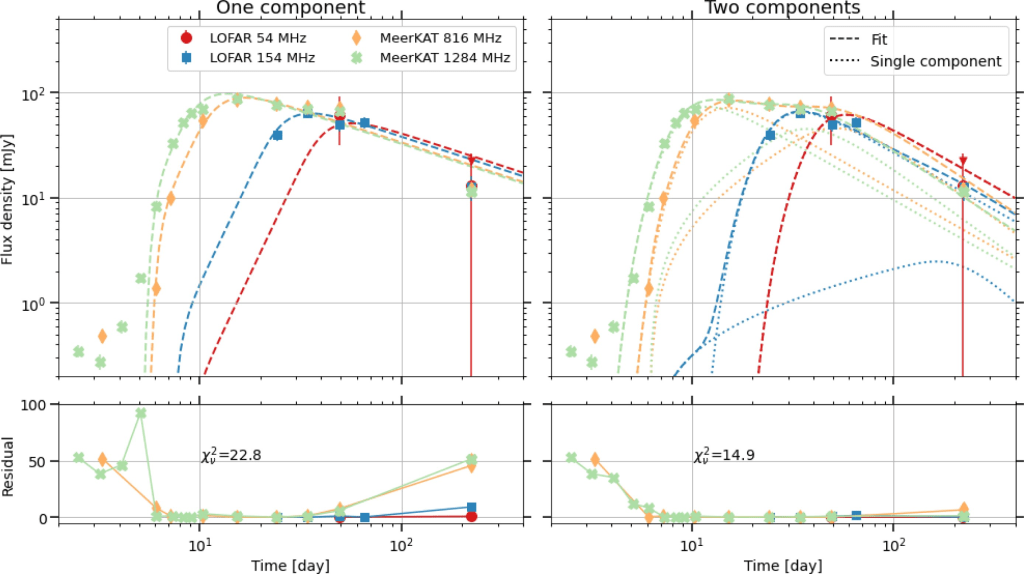
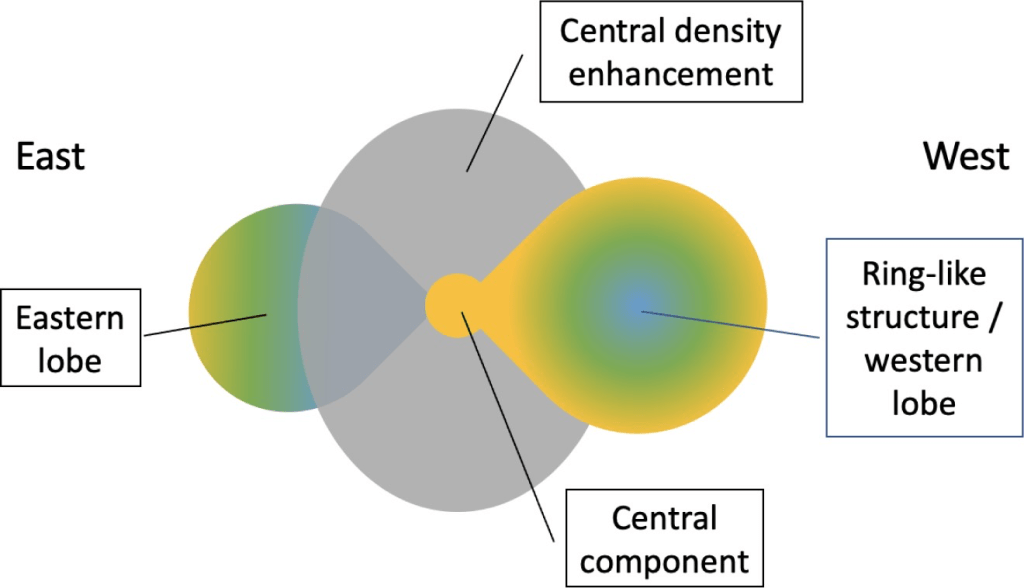
Using observations by LOFAR and MeerKAT, we were able to model the evolution of an outburst of the recurrent nova RS Ophiuchi at low radio frequencies (de Ruiter et al. 2023). This monitoring showed that the emission is most likely from a non-thermal mechanism that is consistent with originating from two lobes of emission.
Gravitational Wave Events
Gravitational wave events are typically from the inspired and merger of two compact objects (black holes and/or neutron stars). If there is at least one neutron star involved, we would expect to observe a bright multi-wavelength afterglow. Our team has been involved in following up gravitational wave events from the very first detection of gravitational waves by Advanced LIGO.
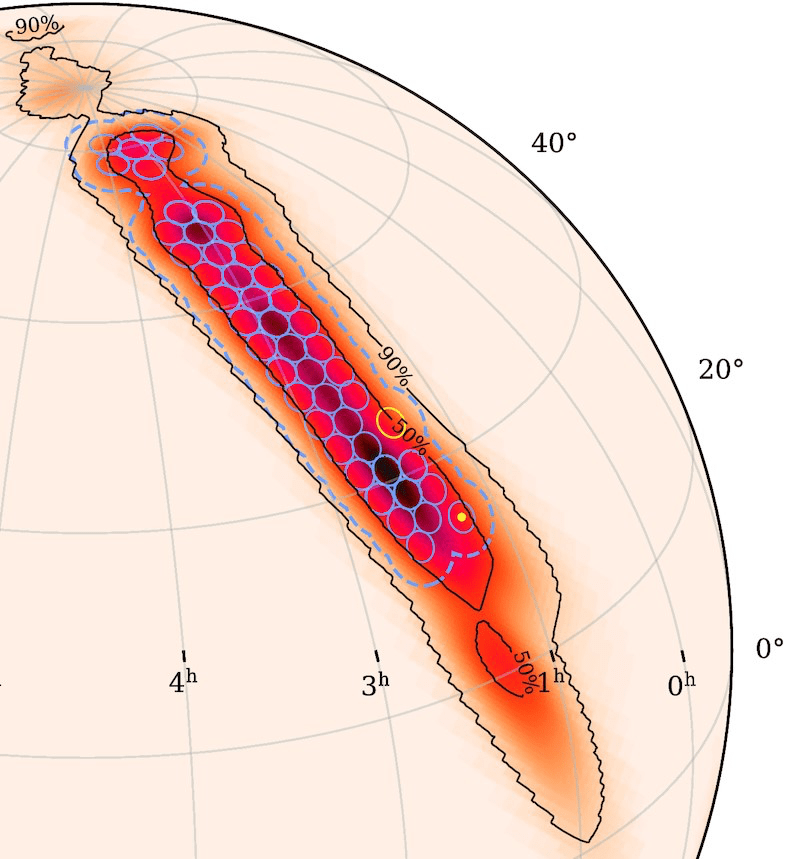
LOFAR is capable of both obtaining targeted observations of candidate counterparts (Broderick et al. 2020) and using the wide field its to conduct large sky area searches for candidate counterparts (Gourdji et al. 2022 and Gourdji et al. 2023)
 Antonia Rowlinson Personal Website