I worked with the LOFAR Radio Observatory to develop and implement the LOFAR rapid response mode, which can respond to transient alerts within 5 minutes (expected to be faster with LOFAR2.0 upgrades). My team and I have used LOFAR Rapid Response observations to study the central engines and jets of Gamma-Ray Bursts (GRBs). GRBs typically split into 2 categories, long and short. The short GRBs are typically associated with compact binary mergers whereas the long GRBs are associated with massive star collapse.
Short GRBs
The short GRBs are expected to originate from the merger of 2 neutron stars or a neutron star and a black hole. In the case of 2 neutron stars, an ongoing question is “what is the central engine?”. During my PhD, I demonstrated that many short GRBs have late time ongoing energy injection in their X-ray light curves and that this is not consistent with a black hole central engine (Rowlinson et al. 2013). Instead, I proposed that the central engine is a new born millisecond magnetar. If a millisecond magnetar is formed, there are a lot of models predicting coherent radio emission at early times following the GRB. I investigated these models and predicted the expected coherent radio emission, demonstrating it is detectable by rapid response radio telescopes (Rowlinson & Anderson 2019).
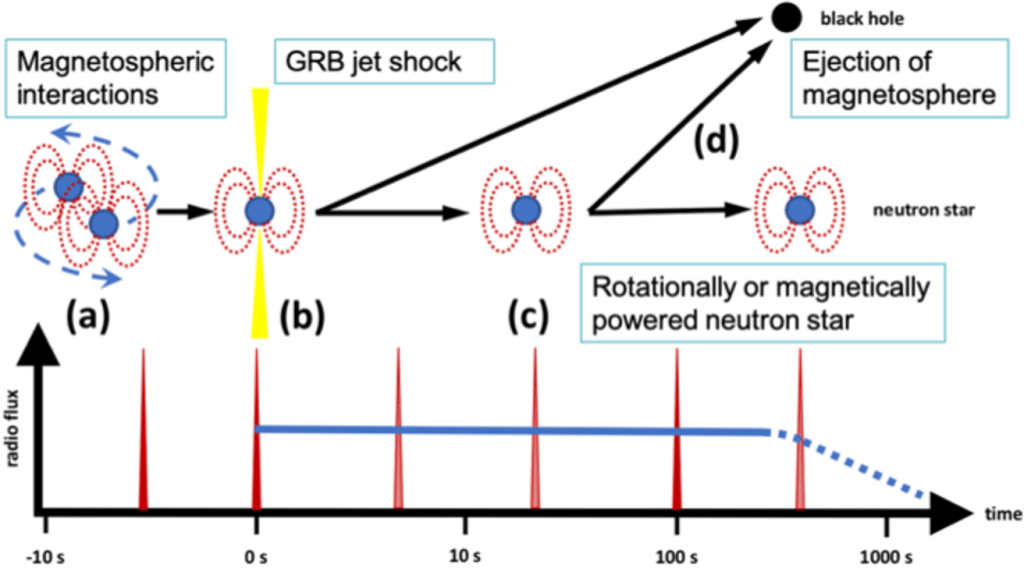
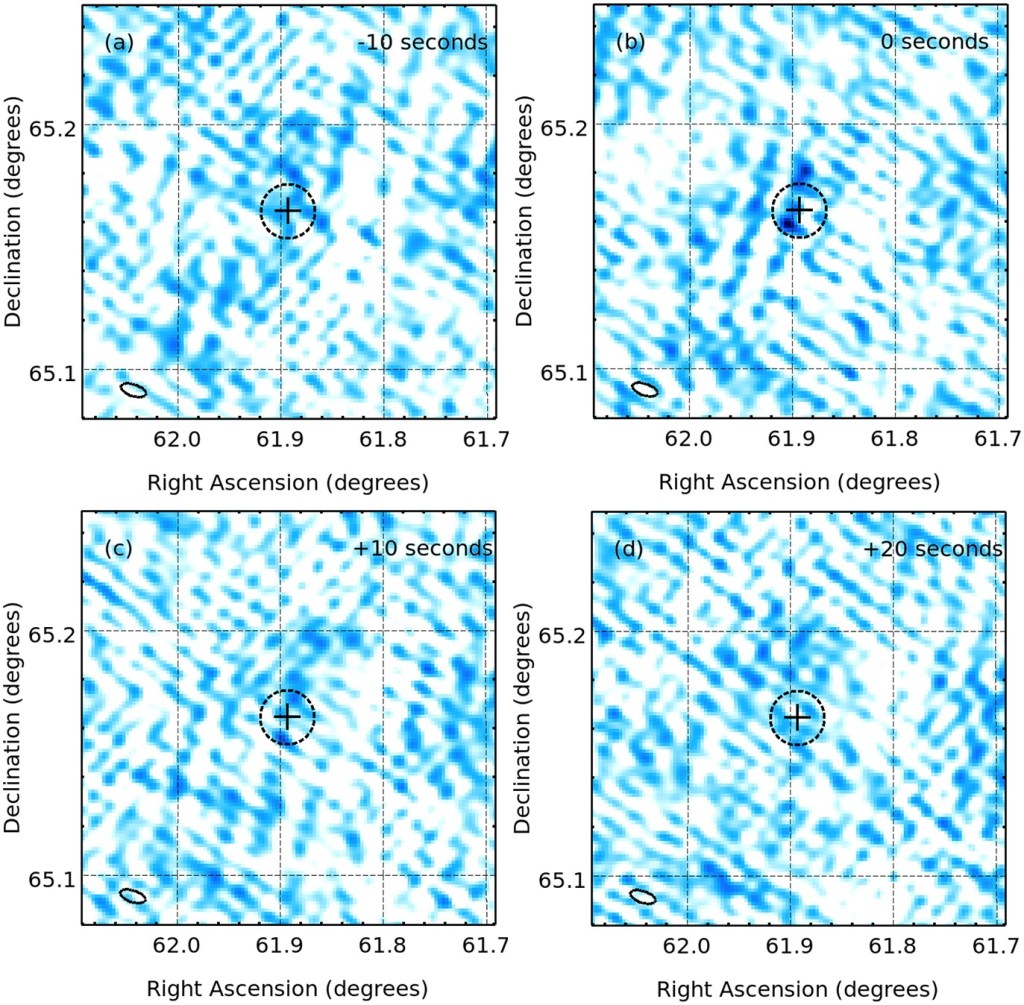
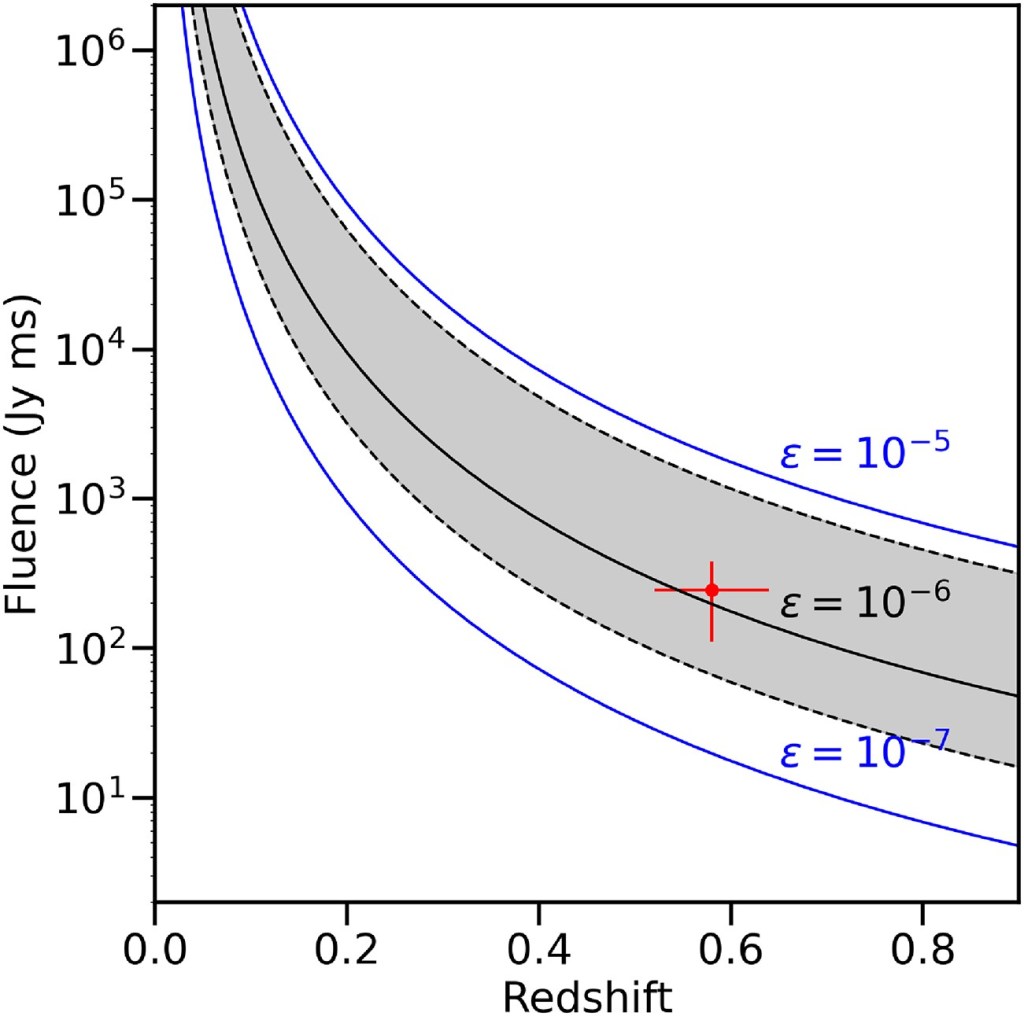
Using LOFAR, we rapidly responded to 2 short GRBs, GRB 181123B and GRB 201006A. We detected no radio emission from GRB 181123B (Rowlinson et al. 2021). Following GRB 201006A, we detected a candidate coherent radio flash roughly 1 hour after the GRB (Rowlinson et al. 2024). This emission is consistent with a radio flash from the magnetar or from the magnetar collapsing to form a black hole.
Short GRBs have also been promptly followed up using the Murchison Widefield Array, with no detections to date. For more information see the following publications:
- A Deep Search for Prompt Radio Emission from the Short GRB 150424A with the Murchison Widefield Array (Kaplan, Rowlinson et al. 2015)
- Murchison Widefield Array rapid-response observations of the short GRB 180805A (Anderson, Hancock, Rowlinson et al. 2021)
- Early-time searches for coherent radio emission from short GRBs with the Murchison Widefield Array (Tian et al. 2022)
The methods used for short GRBs can also be used to search for coherent radio emission associated with gravitational wave events (Tian et al. 2023, Chu et al. 2016).
Long GRBs
Long GRBs may also produce coherent radio emission from the jet or from a magnetar central engine. We investigated the detectability of coherent radio emission associated with X-ray flares using the model proposed by Usov & Katz (2001), finding that some coherent radio flashes would be detectable in LOFAR rapid response observations (Starling, Rowlinson et al. 2020).

 Antonia Rowlinson Personal Website